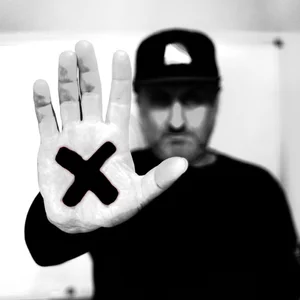
The Desire You Don’t Control.
“The subject is commanded to enjoy.”
– Jacques Lacan
Most men think they’re in charge of their desire
They think they choose what they want.
They think their passions, drives, ambitions, hungers, impulses, pretty much everything that moves them, came from inside.
They imagine desire is self-directed, a kind of inner compass pointing toward the life they’re meant to live.
Lacan would shake his head.
He’d tell you a truth most men never want to hear:
you don’t control your desire.
You obey it.
Not your real desire.
The one society taught you to want.
The one your family praised.
The one your culture rewarded.
The one the market shaped.
The one your friends recognised.
The one woman admired.
The one that made you feel like a man.
The desire you perform for others.
The desire you chase so you don’t have to ask what you truly want.
The desire that keeps you distracted.
The desire that keeps you busy enough to never have to face the Real.
Men live lives organised by demands they didn’t choose, responding to pressures they can’t name, serving expectations they absorbed without consent.
And then wonder why they feel like strangers to themselves.
The illusion of the self-made man
You know the story.
You built yourself.
You pushed.
You hustled.
You outworked the room.
You carved your name into the world.
Your achievements didn’t fall from the sky.
You took them.
And part of that is true.
The work was real.
The battles were real.
The cost was real.
But the script was handed to you long before you realised you were reading it.
Your ambition.
Your sense of duty.
Your hunger for validation.
Your competition with other men.
Your desire to be chosen.
Your craving to be admired.
Your need to be indispensable.
Your terror of being irrelevant.
You didn’t invent those.
The Other did.
The faceless collective that trained you long before you had the language to question it.
Lacan’s point is brutal:
desire is structured by the Other.
You want what you think will make you wanted.
You become what you think will make you belong.
And men mistake this for freedom.
The command to enjoy
We live in a culture that doesn’t just encourage desire.
It demands it.
Work harder.
Earn more.
Travel more.
Have more sex.
Get fitter.
Buy better.
Perform.
Optimise.
Expand.
Achieve.
Be impressive.
Be exceptional.
Never rest.
Never ease.
Never slow down.
Lacan said modern life is shaped by the superego’s command: enjoy.
Enjoy everything.
All the time.
With intensity.
Or you’ve failed.
It looks like freedom, but it chains men to an impossible duty.
A duty to be impressive.
A duty to be fulfilled.
A duty to be successful.
A duty to be satisfied.
And every time you fall short, the voice doesn’t slow down.
It intensifies.
“Do more.”
“Be more.”
“Fix yourself.”
“Try harder.”
“Stop being weak.”
“Stop being lazy.”
“Stop being average.”
No man can meet that demand.
Not because he’s flawed.
Because the demand is insane.
Men burn out not because they’re weak, but because the command to enjoy is endless.
And when enjoyment becomes an order, desire becomes punishment.
Why men fear their real desire
Men avoid their real desire because real desire is dangerous.
Not dramatic.
Not destructive.
Dangerous because it asks for honesty.
Dangerous because it costs something.
Dangerous because it cuts through your image.
Dangerous because it exposes your lack.
Dangerous because it has nothing to do with impressing the world.
Real desire takes you outside the symbolic comfort zone you’ve spent decades building.
It threatens the life you’ve constructed for safety.
It demands you disappoint people.
It forces you to confront the cost of being a subject instead of an object.
Most men would rather be admired than alive.
Most men would rather succeed than exist.
Most men would rather perform desire than feel it.
Because feeling it means letting the mask slip.
Feeling it means losing control.
Feeling it means entering the Real.
The Real is where men grow
The Real is the part of life that doesn’t care about your image.
The part that doesn’t obey your strategy.
The part you can’t negotiate with.
The part that refuses to be solved.
The Real is the boundary where desire stops being a performance and starts being a truth.
Men meet the Real when:
a marriage stops being held together by denial
a business stops offering identity
a body breaks under the strain of perfection
a child asks a question you can’t hide from
a partner says, “I don’t feel you”
a quiet night reveals an emptiness you can no longer outrun
The Real doesn’t destroy you.
It tears open the space where you finally see the cost of living for the Other.
It shows you every compromise, every silence, every lie you’ve told yourself in the name of survival.
And then it whispers the question you’ve been avoiding for years:
What if your life isn’t yours yet?
When men refuse the Real, the world pays the price
This is where your underlying theme enters.
Quietly.
But sharply.
When men refuse the Real, they become unstable.
They stay busy instead of honest.
They stay impressive instead of present.
They stay admired instead of grounded.
They stay successful instead of alive.
And because they never claim their lives from the Other, they cannot hold anything properly.
Not their relationships.
Not their mission.
Not their values.
Not their sons.
Not themselves.
Families drift.
Communities weaken.
Partners harden.
Children internalise absence as normal.
The world becomes a little more hollow.
Because men who refuse their Real desire never step into the structure they are meant to provide.
Not domination.
Not heroics.
Presence.
The world needs men who are present.
Not performing.
Not pleasing.
Present.
Men who aren’t owned by the Other’s desire.
Men who can stand inside their lack without panic.
Men who can say, “I want this” without apologising for it.
Men who can make choices instead of playing roles.
The turning point: refusing the command
Every man reaches a moment where he stops obeying the command to enjoy.
Not with rebellion.
Not with anger.
With clarity.
A moment where he realises that the life he’s been chasing wasn’t built for him.
It was built around him.
Constructed from expectation.
Maintained by fear.
Driven by lack he didn’t understand.
The turning point is simple:
You stop asking what you should want, and start asking what you can live with.
Not the fantasy.
Not the image.
Not the polished self.
The man behind it.
The subject.
This is the first act of sovereignty:
you take responsibility for your desire.
Not the desire that flatters your ego.
The desire that costs you.
The real-world task: name the desire you are afraid to want
Sit down.
No distractions.
No noise.
No excuses.
Write one sentence:
“If I wasn’t afraid of the consequences, I would want…”
Do not soften it.
Do not edit it.
Do not rationalise it.
Write it as if no one will ever read it.
Because this isn’t for anyone else.
This is the moment the subject steps forward.
The reflective question
Which part of your life is organised around a desire that isn’t yours?
Answer it honestly.
The first answer is usually the lie.
The second answer is usually the truth.
Reading list
The Ethics of Psychoanalysis - Jacques Lacan
The Sublime Object of Ideology - Slavoj Žižek
Life and Death in Psychoanalysis - Jean Laplanche
Desire and Its Interpretation - Lacan
The Inner Experience - Georges Bataille