There Is A Room In You That You Haven’t Entered.
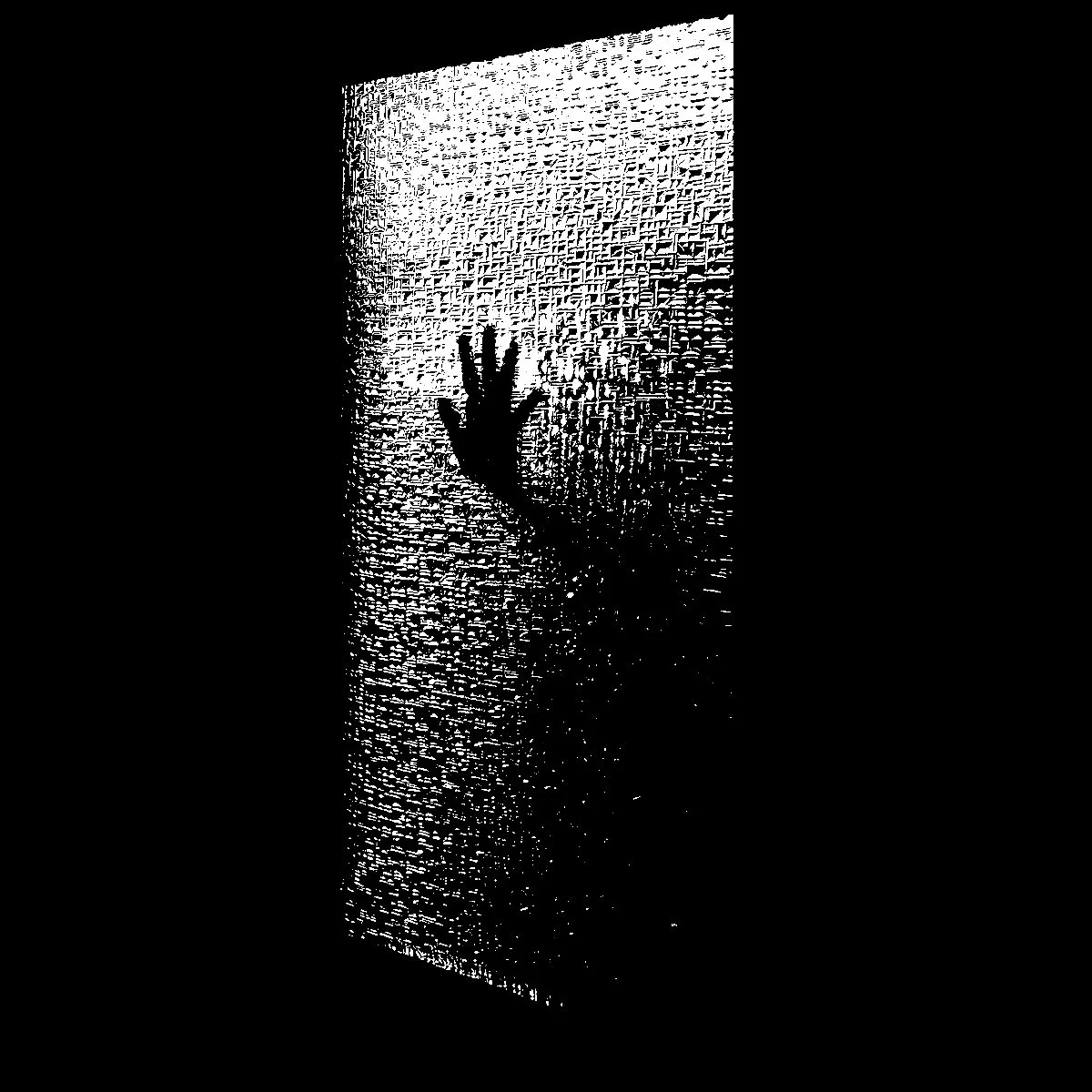
“There is a crack in everything. That’s how the light gets in.”
– Leonard Cohen
There’s a room inside every man he refuses to enter.
A room with no windows.
A room he’s circled for years.
A room he avoids with work, routine, performance, strength, competence, humour, sex, discipline, self-improvement, distraction.
He’ll wander the whole house of his psyche.
He’ll renovate every visible room.
He’ll polish the floors, rearrange the furniture, fix the walls, upgrade the lighting.
But that one door -
he will not open.
Not because he’s weak.
Because he knows what lives behind it.
The truth.
Lacan would say that behind that door is the Real - the part of your life that refuses the story, refuses the performance, refuses the symbolic order that keeps everything neat.
Moore would say that’s where the unfinished initiation waits - the King, Warrior, Magician, Lover sitting in the dark, untouched, unmet, unclaimed.
Nietzsche would say that room is where your becoming lives - the part of you that demands growth you haven’t yet allowed yourself to consider.
Cohen would say that room is cracked, holy, and humming with the kind of light that wounds and heals at the same time.
And all four of them would be right.
The room you avoid is the room that defines you
You don’t avoid that room because there’s nothing inside it.
You avoid it because everything is inside it.
• Your hunger
• Your truth
• Your grief
• Your rage
• Your longing
• Your story
• Your lies
• Your instincts
• Your unlived life
• Your self
• Your pain
• Your direction
• Your fear
• Your potential
• Your father
• Your shadow
• Your power
Every man has this room.
Most never go in.
They treat the threshold like a boundary of safety.
A line they dare not cross because crossing it would force them to live differently -
not perform differently,
live differently.
Why the door stays closed
Men don’t avoid this room because they’re passive.
Men avoid this room because they’re perceptive.
You know instinctively that stepping into that room will change you.
That once you see what’s inside, you cannot unsee it.
That once you touch what’s buried, you cannot bury it again.
That once you face what you’ve avoided, you cannot return to the man you were.
The door stays closed for four reasons:
1. The story inside challenges your identity
Lacan: the truth behind the door doesn’t match the image you show the world.
2. The life inside demands sacrifice
Nietzsche: to grow, something in you must die.
3. The archetypes inside demand responsibility
Moore: initiation is costly.
4. The light inside is painful
Cohen: the wound is the entrance.
And a man will protect himself from transformation disguised as pain for as long as he can.
The signs you’re avoiding the room
You won’t recognise them as avoidance at first.
They look like “normal” life problems.
• Boredom that won’t go away
• Irritation that has no obvious trigger
• A restlessness in the chest
• Numbness underneath success
• A fatigue that doesn’t respond to rest
• A partner saying they can’t feel you
• An edge you’ve lost
• A quiet self-loathing
• A dream that haunts you
• A desire you won’t name
• A grief you pretend is gone
• A fear you’re too proud to speak
• A hunger for something you can’t articulate
These aren’t flaws.
They’re signals.
Knuckles tapping from the other side of the door.
Moore’s warning: the unentered room becomes a tyrant
Robert Moore’s work is misunderstood as archetype cheerleading.
In reality, it’s a diagnosis.
When you refuse to enter that inner room, the archetypes turn pathological:
The King becomes passive or tyrannical
The Warrior becomes numb or explosive
The Magician becomes manipulative or absent
The Lover becomes addicted or shut down
Your inner architecture collapses into distortion.
Not because you’re broken.
Because the throne room of your psyche is locked behind that door.
You cannot rule your life from outside your own centre.
Nietzsche’s warning: the unentered room makes you small
Nietzsche said every man hides from his own greatness.
Not because greatness is too hard.
Because greatness is too honest.
When you avoid the room, you shrink yourself.
You settle.
You compromise.
You dim.
You negotiate with your own potential.
You live in half-light, half-truth, half-presence.
And you call that balance.
But it isn’t balance.
It’s spiritual claustrophobia.
The man you could be stands behind that door, waiting for you to stop pretending you don’t hear him.
Lacan’s warning: the unentered room feeds the fantasy
The less you enter that room, the more elaborate the fantasy becomes.
You build ideal images:
The perfect partner
The perfect body
The perfect career
The perfect discipline
The perfect identity
The perfect inner peace
The perfect spiritual transformation
These fantasies keep you out of the room.
Because fantasies feel safer than reality.
But fantasies don’t transform you.
They sedate you.
The Real is always behind the door.
Cohen’s wisdom: the room is cracked, but the crack is the way in
Cohen understood the sacred in the broken.
The reason you avoid your room is because you feel the crack.
You think the crack means you’re weak.
But the crack is an invitation.
A place where the light wants to enter.
A place where the truth leaks out.
A place where the veil thins.
A place where the life you buried calls your name.
What you call broken is actually holy.
The world needs men who enter that room
Here’s the subtle theme tightened to a blade:
When men don’t enter their inner room, they become spectators in their own lives.
And the world becomes slightly more brittle.
Homes lose depth.
Relationships lose heat.
Communities lose backbone.
Teams lose clarity.
Children lose a model of initiation.
Women lose the presence they crave.
Men lose themselves.
The world doesn’t need perfect men.
It needs men who have walked into the deepest room of their own lives and come back with something true.
The turning point: when the door stops letting you ignore it
You know this moment.
A conversation that lands wrong
A disappointment that hits deeper than expected
An ache in the body that doesn’t go away
A truth someone speaks that shakes you
A moment of disgust at your own avoidance
A night where the silence is too loud
A memory you can’t shake
A desire too persistent to ignore
A grief you can’t swallow anymore
The door feels closer.
The room feels louder.
The avoidance stops working.
This is the threshold.
This is the call.
This is the line in the sand.
This is the moment you put your hand on the doorknob.
The real-world task: open the door by one inch
You don’t have to walk inside today.
But open the door.
By one inch.
Do something that pierces the avoidance:
• Write the truth you’ve been refusing
• Name the desire you’re terrified of
• Speak the thing you’ve been softening
• Admit the grief you’ve buried
• Make the call you’ve postponed for years
• Walk away from the thing that’s been draining you
• Sit in silence long enough to hear what you’ve been drowning out
Crack the door open.
Let the light through the crack.
One inch is enough to begin.
The reflective question
What is behind the door you’ve been circling for years - and what are you afraid will happen if you enter?
Tell the truth.
Then let it change you.
Reading list
King, Warrior, Magician, Lover - Robert Moore
The Ethics of Psychoanalysis - Lacan
Thus Spoke Zarathustra - Nietzsche
Book of Longing - Leonard Cohen
The Hero with a Thousand Faces - Campbell