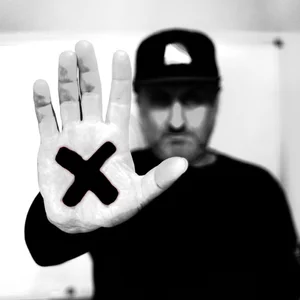
Why We Are Addicted to the Fight.
“I didn’t know who I was unless something was wrong.”
– a client, six months sober, finally learning to feel peace without panic
There’s a man you become when things go wrong.
You know him well.
He shows up in crisis.
He thrives in war.
He gets shit done, takes no prisoners, and looks great in the mirror when he’s bleeding.
That man is sharp. Focused. Dangerous.
And that man? He’s probably your favourite version of yourself.
Because for most of us, conflict is the only time we feel clear.
When there’s a fire, we know what to do.
When someone crosses us, we know how to respond.
When we’re under attack, the purpose comes online.
We are addicted to the fight - not just because it’s dramatic or masculine or primal - but because it’s the only place we’ve ever truly felt alive.
The War Machine in the Chest.
From an early age, many of us learned that peace is dangerous.
Peace meant vulnerability. It meant softness. It meant the silence before the scream, the calm before the storm, the emptiness that exposed how alone we really were.
So we adapted. We learned to arm up, spark conflict, and find meaning in chaos. Not because we’re toxic. Not because we’re cruel. But because we never learned another way to feel powerful.
In the absence of real connection, real purpose, or real safety, we chose adrenaline.
We became soldiers without a war. So we started creating them.
How the Fight Becomes Identity.
Look at your patterns.
How many times have you started a fight just to feel something?
Picked an argument in a relationship because things were getting “too easy”?
Sabotaged a period of calm by manufacturing a crisis?
Waited until the last minute to complete something - just to kick your nervous system into gear?
That’s not a flaw in your character. That’s a survival strategy. One built on years of believing that calm equals death.
You don’t trust peace because peace doesn’t give you an enemy.
And without an enemy, you don’t know who to be.
The Myth of the Noble Warrior.
We love the archetype of the warrior. The lone man with a mission.
He’s in all the films. He has the best lines. He doesn’t need anyone.
But what they don’t show you is the after.
The warrior with no war.
The fighter with no one left to fight.
We become addicted to the fight because it saves us from the stillness. And stillness is where the grief lives. The shame. The memories. The longing. The need.
Fighting becomes our escape.
But you can’t build a life on escape.
Sooner or later, the battle ends. And then what?
The Emotional Turning Point: You Can Put the Sword Down.
There comes a moment when the cost of war becomes too high.
When you realise you’ve burned down every bridge that could’ve led you home.
When even your victories feel empty because there’s no one left to share them with.
That’s the turning point.
It doesn’t mean becoming soft. It means becoming wise.
It means learning to recognise that the fight was never the goal.
It was just the only language you had for hunger, pain, and fear.
And now? Now it’s time to learn a new language.
Because you weren’t built just to survive battles.
You were built to build. To love. To hold. To lead.
There is strength in war.
But there is mastery in peace.
The Real-World Task: Sit Without the Fight.
Pick a moment this week when you would normally escalate - internally or externally.
That itch to criticise your partner.
That urge to send the harsh email.
That craving for drama, doom-scrolling, or high-stakes decisions.
Don’t act on it.
Instead:
Breathe.
Feel what’s beneath the urge.
Ask yourself, “What do I actually need right now?”
And wait. Just 90 seconds. Long enough for the adrenaline to settle.
Then choose a different response.
Not because you’re weak.
But because you’re done being ruled by the fight.
Reflective Exercise: Journal on the Fight.
Where in my life do I create unnecessary conflict - and why?
What emotions do I avoid by staying in battle mode?
Who am I when there is nothing to fix, prove, or win?
What scares me about becoming a man who lives in peace?
What kind of life could I build if I stopped using war as fuel?
Write honestly. Don’t try to win. This is not a competition. This is you, meeting yourself in the stillness.
Reading List:
The Untethered Soul – Michael A. Singer
The Way of the Peaceful Warrior – Dan Millman
The Body Keeps the Score – Bessel van der Kolk
Meditations – Marcus Aurelius
The Warrior Within – John Little (on Bruce Lee’s philosophy)
We are not our scars.
We are not our rage.
We are not our ability to fight.
We are what’s left when the fighting stops.
And if you’ve got the courage to meet that man,
You’ll finally be free.
We’re in this together.